quinta-feira, 14 de junho de 2012

quarta-feira, 23 de novembro de 2011
terça-feira, 8 de novembro de 2011
An Interview with Mônica Picavêa: The Transition of Organisations in Brazil
An Interview with Mônica Picavêa: The Transition of Organisations in Brazil
October 27, 2011 by Simon
Yesterday Maria and I caught up with our good friend Mônica Picavêa, one of the co-founders of Transition Towns Brasil. Although many of you reading this blog will be more than familiar with the Transition Towns Movement, I wanted to speak to Mônica about the work she is doing in relation to the transition of organisations in Brazil.
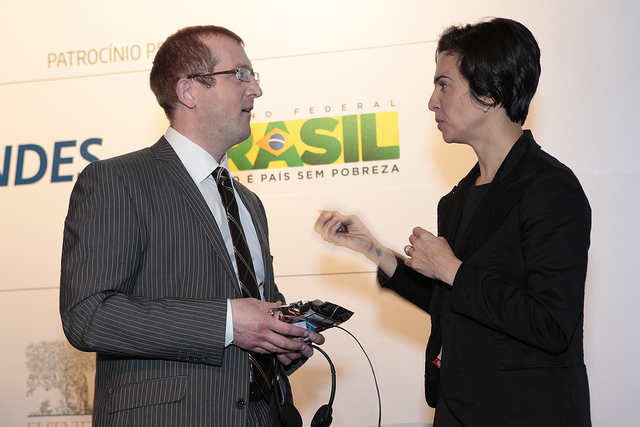
Mônica and I discussing Transition at this year’s Strategy and Execution Summit, São Paulo
Mônica works with organisations using the ingredients of the Transition Town Movement. She has also extended the methodology to include additional ingredients, to allow organisations to move away from just focussing on profit, to a more holistic view of themselves, which Mônica summarises as People, Purpose and Profit.
One thing that I would like to do is really work with Mônica to document how she is now working with organisations. This work is quite remarkable, since Brazil has many problems that are not the same that we have in the West, and what she is now able to do with this Transition methodology is help businesses integrate better into their communities. She focusses on making organisations become both more sustainable and resilient, while at the same time always having an eye on the financial performance of the company. In one large cabling company she is working with, they have discovered that they have become more efficient, less wasteful, more profitable, are winning more contracts, and seeing far less absenteeism as as result of their great transition, facilitated by Mônica.
This company also is now doing some wonderful work in their local community. They have revitalised and regenerated a local park, which now has a pitch for football and a car park, and they are also helping to create new local businesses to support their own employees, such as setting up a new bakery. Not only this, but waste products from their organisation are now in fact becoming the nutrients, or the raw materials for other companies which are being encouraged to be set up in the same vicinity, thus developing a resilient community.
So whereas before the organisation saw itself as isolated from the community, its employees are happier, more efficient, and the entire city is benefitting, with the mayor and local government officials now visiting and becoming interested in their work.
I have made this interview with Mônica in English, in oder to be able to start to bring these case studies of the great work in Brazil to a wider audience.
I also made a second video, which you can also see below, which was recorded in Portuguese with Maria Auxiliadora speaking to Mônica in depth about the issues being faced in Brazil, and what the implications are for this work.
As I say in the video, I hope to be able to make some more short films of the projects that are happening in Brazil, and I now have a video channel for Transition Consciousness where hopefully you will begin to see many more videos over the coming months.
www.vimeo.com/transitionconsciousness
Organizações em Transição no Brasil from Transition Consciousness on Vimeo.
The Transition of Organisations in Brazil from Transition Consciousness on Vimeo.
segunda-feira, 7 de novembro de 2011

terça-feira, 25 de outubro de 2011
Transition Training no Hub de São Paulo/ Out 2011

Começando na sexta-feira, no começo da noite de Lua Cheia, , apesar do trânsito da metrópole e com alguns atrasos inevitáveis , todos chegaram ansiosos para começar. Houve o momento de apresentação pessoal através da dinâmica “ duas filas em movimento” , em seguida foi apresentado o contexto da transição, falando sobre o pico do petróleo, mudanças climáticas e a situação do nosso Planeta terra no contexto atual de globalização. Diante desse cenário um tanto quanto angustiante, a apresentação do movimento do Transition Towns, sua origem, princípios e exemplos, surge como um caminho de esperança e otimismo. E assim, a noite seguiu com muita informação e dinâmicas de grupos sobre os temas abordados.
O sábado chuvoso criou um clima aconchegante entre os recém amigos, com o aprofundamento do tema, falando ainda sobre o movimento, foi explicado sobre os doze ingredientes, sete princípios e como iniciar e manter os grupos de transição em sua comunidade. Alem disso, foram elucidados métodos de sensibilização e engajamento, reforçando o aprendizado através das dinâmicas em grupo. Após o almoço, o momento foi de interiorização, acessar a mente interior também foi uma ferramenta para estimular a transição interna, e assim surgiu a questão: "Quais são as crenças e histórias do nosso mundo sobre as quais, o sistema de crescimento industrial se baseou, e nos levou ao ponto em que todo o nosso sistema se tornou insustentável?”. Aproveitando esse sentimento de inquietação, a dinâmica “roda do futuro” encerrou o dia trazendo um pouco mais de expectativa para esse novo futuro transformado pela transição.
O domingo ainda chuvoso, foi mais agitado e cheio de dinâmicas para afastar o frio de primavera e criar ainda mais laços entre os participantes. Foi apresentado a tecnologia de espaço aberto, e também, todos criaram uma linha do tempo a caminho da transição,expondo o que desejam para o futuro da vida, bairro, cidade, país e planeta. E assim, após o conselho final, encerrou o treinamento do Transition Towns, com a formação de um grupo eclético , com pessoas muito interessantes e de qualidade, que certamente serão articuladores de transição em suas comunidades, fazendo com que, em pequenas comunidades se transformando, o mundo também irá mudar, e para melhor!

